

Retirement Can Wait
I didn't need retirement, I just needed space.

For the last year and a half of my corporate healthcare career, I walked around with my teeth gritted and my tongue bitten. Every meeting required a version of me I didn’t recognize… someone who could deliver bad news with a straight face, manipulate metrics to satisfy a client, and nod along while good nurses lost their jobs because shifting resources around looked better on a balance sheet. The people we were supposed to be serving, the actual human beings enrolled in a health insurance plan, were an afterthought. The front-line workers were expendable. And somewhere above me, the directors and vice presidents seemed genuinely energized by the game of it, which made me feel more alone than I can easily describe. I couldn’t make myself care about the right things. I couldn’t make myself stop caring about the wrong ones. And because I worked remotely, there was no commute to decompress in, no physical distance between the job and the rest of my life, just a laptop closing and the same four walls, and the pretending following me right into my own living room. For a couple of years I knew I needed to leave. I also knew I was unlikely to ever make that kind of money working from home again, and that knowledge kept me right where I was. Golden handcuffs, indeed.
I didn’t know then that I had been doing some version of that my entire adult life.
When I finally left, the company called it retirement and threw me a party. I knew that I couldn’t retire forever, but I had to get out of there. I planned to take a year off and decide what I wanted to do next. I expected to feel immediate relief. What I felt instead was disoriented. My whole life had been organized around obligations, and suddenly the structure was gone. There was space where the noise used to be, and space, it turns out, can be deeply unsettling when you’ve spent decades filling every corner of it. I didn’t know what to do with quiet. I wasn’t sure I trusted it.
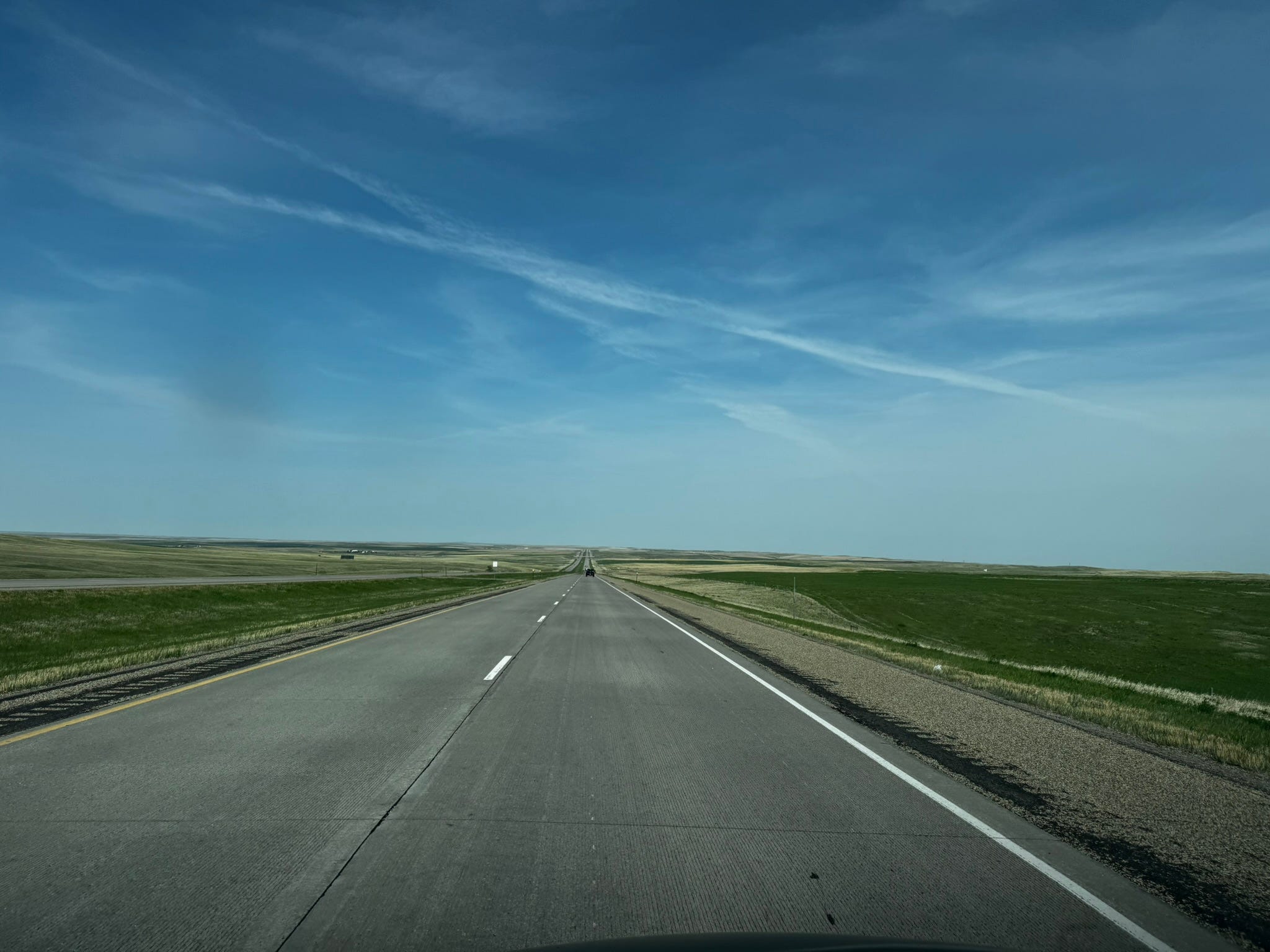
So I drove. Thirty-five days, more than six thousand miles, mostly sleeping in the back of my minivan. People who watched the videos remember the scenery, the mountains, the long empty stretches of highway. What I remember is learning, slowly and with some resistance, how to be alone with myself without it feeling like a problem to solve.
The day my bones finally settled was in Minnesota, at the site of Laura Ingalls Wilder’s dugout cabin on Plum Creek. It’s on private property in the middle of a field. There’s an honor box at the gate and it costs ten dollars to get in, and on the day I was there, not another person showed up. I sat with my feet in the creek for most of the afternoon, thinking about those books I had loved as a girl, thinking about what it meant to make a home out of almost nothing in the middle of an indifferent landscape. I wasn’t sure what I was feeling exactly, but it was the quietest I had been in years. I made a video that day that wasn’t my usual travel content. It was about something harder to name, about peace maybe, or about the particular relief of a day with no performance in it. I was on my way home at that point, but some part of me could have stayed out there indefinitely. The road trip had done something to me that I hadn’t anticipated. It had given me enough stillness to finally hear myself think.
What I heard was uncomfortable at first. I had spent so many years anticipating what everyone around me needed that I had completely lost track of what I needed. My children, my employees, my tenants, my family, my community organizations, I carried all of them, not just practically but emotionally, inside my own body. If one of my kids was struggling, I couldn’t relax. If a tenant had a problem, I absorbed it. If an organization I belonged to was in crisis, I felt responsible for fixing it. I told myself this was love, and some of it was. But somewhere along the way I had confused carrying people with supporting them, and those are not the same thing. One is generous. The other is quietly crushing, and it takes a long time to notice the difference when you’ve been doing it your whole life.
Putting things down didn’t happen all at once. It happened the way most real changes happen, gradually, almost imperceptibly, and then one day you look up and realize you are living differently than you were before. I started saying no to most things, and yes only to what genuinely excited me. I stopped scheduling my life around what looked productive or impressive. I started spending mornings in my garden with a cup of coffee, building something I think of as a little oasis, and I noticed that I wasn’t checking my phone to see if I was missing something better. I went to my neighborhood coffee shop this morning in t-shirt and flip-flops with my hair in a ponytail and it didn’t occur to me until just now that I hadn’t thought once about how I looked. That might sound like a small thing. It doesn’t feel small.
I went back to work after eight months off. I teach nursing students now, and I went back to picking up a few shifts at the hospital here and there. I manage my three rental properties. I write here and I make videos. My life is not quiet in the conventional sense. But I work jobs that pay less than my experience and education would justify, and I do it deliberately, because they’re flexible and meaningful and I no longer need to prove anything by standing at the top of my field. Next month I’m leaving for a month in Nova Scotia, sleeping in my Prius V, camping, wandering without an itinerary or a single reservation. I’m not planning the perfect shots for social media. I just want to see what’s there.
I still think about retirement. I still hope to get there someday. But I no longer believe retirement is the thing that will save me, because I finally understand that I never needed to be saved from work. I needed to be saved from a life that didn’t fit. And it turned out I didn’t have to wait. I just had to change the shape of things, leave what was crushing me, set down what wasn’t mine, and make enough room to finally hear myself again.
The woman I found in that space is someone I genuinely like. She has dirt under her fingernails and she spends her free hours writing, or reading memoirs by solo women who did something hard and solitary and outside the expected script, like hiking the Pacific Crest Trail, driving across the country alone, building a life that looked nothing like what anyone around them expected. She used to consume that kind of story and admire it from a distance. Now she recognizes herself in it.
She’s not waiting for her real life to begin. She already knows this is it. Real life is right now, and it’s finally starting to resemble what it should have looked like all along.
If you’re interested in the companion video to this essay, you’ll find it here.
Your post echoed so many of my own feelings about changing pace. I'm 65 and retirement isn't financially possible for me, but simplifying my life in the country has been a blessing. I've started setting boundaries, and saying ‘no’ so I can enjoy the little things. I’m still figuring myself out, but I'm getting there. Enjoy your well-deserved next chapter!
I identify with this so much. I tried to fit into my career for way too many decades then told myself I was a failure for not wanting it anymore. I’m happier sitting in my garden with my feet in the dirt than I ever was in a spa having someone else do my nails. I am glad I had the courage to leave it behind and give myself space and time to think.